The dining room is more than just a place where meals are served. It is where families sit together after a long day, where friends stay a little longer than expected, and where some of the best conversations happen over a cup of tea or a home-cooked meal.
A well-designed dining room does not necessarily have to be large or expensive. What matters is how comfortably everything comes together — the dining table, chairs, lighting, colours, storage and small decorative details. When these elements are planned properly, even a simple dining area can feel warm, inviting and connected to the rest of the home.
At Amandeep Interiors, we believe a good dining room should look beautiful while still feeling easy to live in. Whether you have a spacious dining area, a compact apartment corner or an open-plan living and dining space, thoughtful interior design can make a noticeable difference.
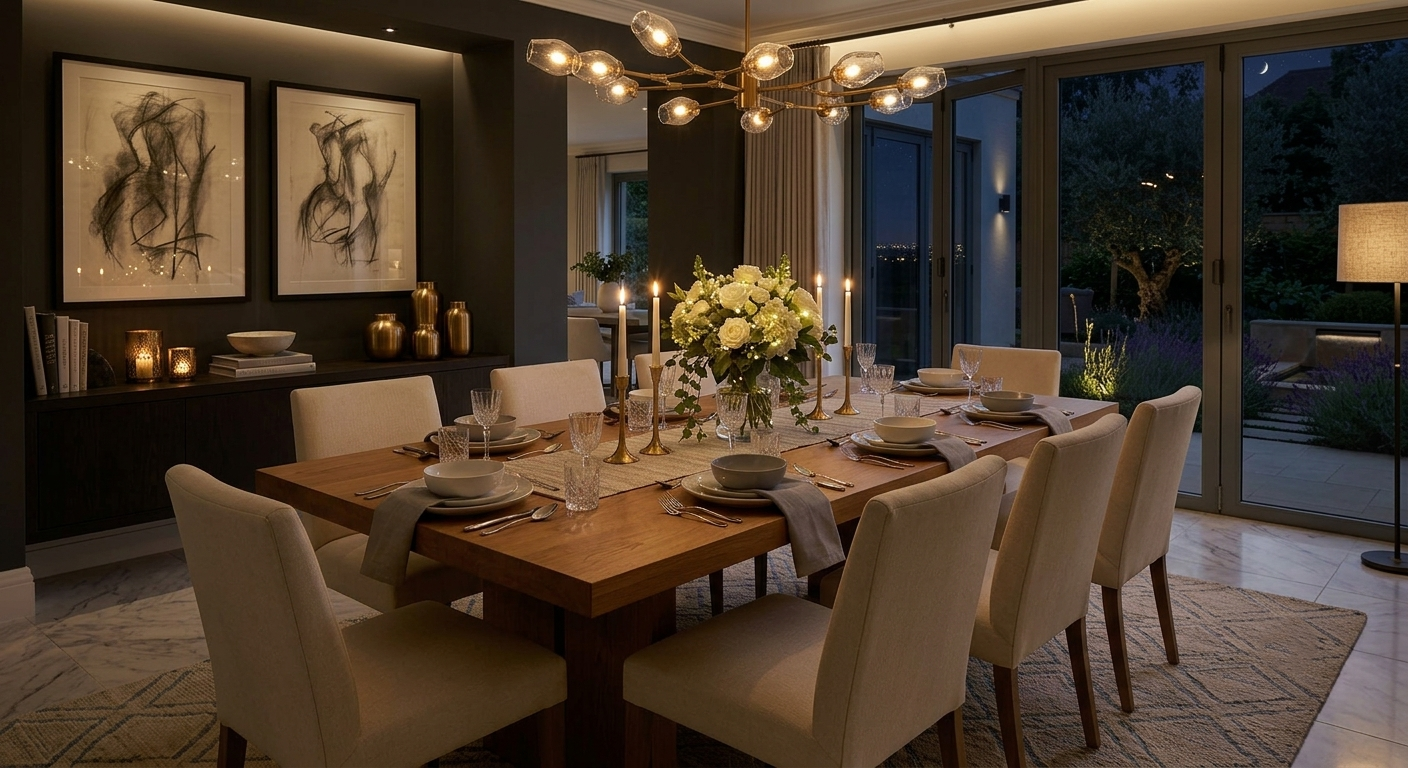
What Makes a Dining Room Feel Welcoming?
A welcoming dining room is not created by adding expensive furniture or filling every corner with décor. In fact, too many elements can make the room feel crowded. The real charm comes from balance.
A comfortable dining table, enough space to move around, pleasant lighting, suitable colours and a few personal touches can completely change the atmosphere. Natural light can make the room feel fresh during the day, while warm lighting can make evening meals feel more relaxed.
The dining room should also suit the way you actually use your home. If you usually have family dinners, comfort and easy movement should be priorities. If you often invite guests, you may want additional seating and a little more flexibility. For smaller homes, the dining area may need to serve more than one purpose.
1. Start With the Right Dining Table
The dining table is naturally the centre of the room, so it deserves careful attention. Before choosing a table, think about the number of people who normally use it. A four-seater may work perfectly for a small family, while a six- or eight-seater can be more suitable for larger families or people who regularly entertain guests.
The shape matters too.
Rectangular dining tables
Rectangular tables are one of the most versatile options. They work especially well in longer rooms and can comfortably accommodate several people.
Round dining tables
A round table can be a great choice for smaller dining spaces. It removes sharp corners and allows everyone at the table to interact easily.
Square dining tables
Square tables can work well in compact, symmetrical rooms. They also create a more intimate dining arrangement.
Extendable dining tables
If you have limited space but occasionally host larger gatherings, an extendable table can be a practical choice. It gives you flexibility without permanently occupying extra floor space.
The most important thing is not simply choosing a table that looks attractive. It should be appropriately sized for the room and leave enough space for people to sit, stand and walk around comfortably.
2. Choose Dining Chairs for Comfort
Beautiful dining chairs are great, but if they are uncomfortable, people will notice very quickly. Look for chairs that provide proper back support and have a comfortable seat height in relation to the table. Upholstered chairs can add softness and warmth, while wooden chairs can give the room a more natural and timeless appearance.
You do not always have to use identical chairs either. For a more relaxed and contemporary look, you can combine different seating styles while keeping a common colour or material throughout the room. A dining bench is another option worth considering, particularly for modern homes — it can seat several people while giving the room a slightly more casual feel.
The goal is simple: the dining area should make people want to sit and stay.
3. Use Lighting to Set the Mood
Lighting can completely change the feeling of a dining room. During the day, make the most of natural light wherever possible. Large windows, open curtains and lighter finishes can help create a bright and airy atmosphere.
For evenings, the lighting needs to be more carefully planned. A pendant light or chandelier placed above the dining table can become the focal point of the room. A layered lighting approach can include:
- A pendant or chandelier above the dining table
- Recessed ceiling lights for general illumination
- Wall lights for additional warmth
- Accent lighting for artwork or display units
- Soft decorative lighting for evening ambience
For a welcoming dining room, warm and comfortable lighting is usually a better choice than harsh, overly bright light.
4. Add a Beautiful Dining Room Wall
The wall behind the dining table is a great place to add personality. You do not necessarily need a complicated design. Sometimes a textured wall, wooden panel, subtle wallpaper or a piece of artwork is enough.
For a modern dining room, you could consider:
- Fluted wall panels
- Wooden textures
- Neutral textured paint
- Marble or stone finishes
- Simple geometric panels
- Large artwork or decorative mirrors
- Subtle wallpaper
A feature wall works particularly well when the rest of the room is kept relatively simple. For example, a warm wooden dining table paired with a soft beige wall and minimal artwork can create a calm and timeless look without making the room feel over-designed.
5. Bring Warmth With Natural Materials
Natural materials can make a dining space feel more comfortable and lived-in. Wood is one of the easiest materials to introduce. A wooden dining table, wooden wall panel, console or even small decorative pieces can add warmth to an otherwise neutral room.
Other materials such as rattan, marble, stone and natural fabrics can also add texture. Current dining room design trends increasingly combine natural finishes with modern furniture and clean layouts. You do not need to use all of these materials together — choose one or two and allow them to complement the rest of the interior.
6. Select Colours That Feel Comfortable
Colour plays a major role in how a dining room feels. If you want a calm and timeless dining space, neutral shades such as beige, cream, off-white, warm grey, taupe or soft brown can work beautifully.
If you prefer something more expressive, you can introduce deeper shades through a feature wall, chairs, artwork or décor. Colours such as terracotta, olive green, navy and muted earthy tones can add character without overwhelming the room.
The trick is to create a balanced palette — one main colour, one supporting shade and a few small accents, rather than several strong colours competing for attention.
7. Make Storage Part of the Design
A dining room can quickly become cluttered if there is nowhere to store crockery, serving dishes, glasses and other dining essentials. This is why storage should be considered during the planning stage rather than added as an afterthought.
A crockery unit, sideboard, console or built-in cabinet can provide useful storage while also becoming part of the room's design. For compact dining rooms, wall-mounted cabinets or built-in storage can be especially useful because they use vertical space without taking up too much floor area. Glass-front cabinets can display beautiful crockery, while closed cabinets can hide items that you do not want on display.
Good storage should make the dining room feel cleaner, not heavier.
8. Use a Mirror to Make a Small Dining Room Feel Larger
If your dining area is small, a mirror can be a simple way to make it feel more open. A large mirror placed on the wall can reflect light and create the impression of additional space. Mirrored panels can also be combined with wooden or textured elements for a more contemporary look.
This works especially well in apartments where the dining area is connected to the living room or kitchen. However, avoid covering every wall with reflective surfaces — one carefully chosen mirror is usually enough to create the desired effect.
9. Keep the Layout Comfortable
A beautiful dining room is not useful if moving around it becomes difficult. Think about the path people will take when entering the room, pulling out chairs, serving food and moving between the dining table and kitchen.
This is particularly important in open-plan homes. If the dining area sits between the kitchen and living room, the furniture should allow easy movement between both spaces. The dining table should feel like a natural part of the overall layout rather than an obstacle placed in the middle.
10. Connect the Dining Room With the Rest of Your Home
The dining room should not feel like a completely separate world. If your living room uses warm wooden finishes and neutral colours, repeating some of those elements in the dining area can create continuity. For example:
- The same wood finish
- Similar wall colours
- Matching metal accents
- Similar flooring
- Complementary fabrics
- Consistent lighting styles
This does not mean everything needs to match exactly. A little variation keeps the space interesting, while repeated materials and colours help the home feel connected.
11. Add a Few Personal Details
This is where a dining room starts feeling like your dining room. A vase of fresh flowers, a family photograph, handmade décor, a favourite painting or a simple centrepiece can make the space feel more personal. You can also change small elements according to the season or occasion.
The key is not to overdo it. A dining table should still have enough open space for plates, serving dishes and everyday use.
12. Consider a Crockery Unit or Display Cabinet
A crockery unit can be both practical and decorative. Instead of keeping beautiful dinnerware hidden away, glass-front cabinets allow you to display selected pieces while keeping them organised. Modern crockery units can also include a combination of open shelves, closed storage and decorative lighting.
For a small dining room, a slim unit may be enough. In a larger space, a full-height built-in cabinet can become a strong design feature. The design should complement the dining table rather than compete with it.
13. Add Greenery for a Fresh Touch
Plants can make almost any interior feel more alive. A small indoor plant on a sideboard, a vase of fresh greenery on the dining table or a larger floor plant in an empty corner can add colour without requiring a major design change.
Greenery works particularly well with natural materials such as wood, stone and rattan. If your dining room already has several decorative elements, keep the plant simple — sometimes one healthy plant looks better than several small ones scattered around the room.
14. Design a Small Dining Room Smartly
Not every home has a separate dining room. In apartments and compact homes, the dining area may share space with the living room or kitchen. That does not mean it cannot look stylish. Some useful ideas include:
- Choose a compact four-seater table
- Consider a round dining table
- Use a bench on one side
- Choose chairs that can be pushed completely under the table
- Use wall-mounted storage
- Add a mirror to reflect light
- Keep the colour palette light
- Avoid oversized furniture
- Use a pendant light to define the dining zone
15. Open-Plan Dining Rooms Are Becoming More Popular
Many modern homes combine the living room, dining area and kitchen into one connected space. This layout can make a home feel larger and more social because people can interact even while doing different things.
The dining table can act as a natural transition between the kitchen and living area. A pendant light can visually mark the dining zone, while a rug or feature wall can give it its own identity within the open space.
16. Modern Dining Room Design Doesn't Mean Cold or Empty
There is a common idea that modern interiors have to be completely minimal and plain. That is not necessarily true. A modern dining room can still feel warm and inviting. The combination of clean furniture, warm wood, soft upholstery, natural textures and comfortable lighting can create a contemporary space without making it feel cold.
For example, a simple wooden dining table, beige upholstered chairs, a warm pendant light, a textured wall and one large artwork. There is nothing excessive about the design, but the room can still have plenty of character.
17. Create a Dining Room That Works for Everyday Life
One of the biggest mistakes in interior design is creating a room that looks beautiful in photographs but is difficult to use every day. Think about where you will keep your serving bowls. Where will extra chairs go? Is there enough room for children to move around? Can you clean the table easily? Is the lighting comfortable during dinner?
These practical questions are just as important as choosing the right colour or décor. At Amandeep Interiors, we believe good interior design should make everyday life easier, not simply make a space look impressive.
18. Dining Room Design Ideas for Indian Homes
Indian homes often have a unique relationship with the dining area. Meals are frequently shared with family, guests may arrive unexpectedly, and the dining table can become a place for much more than eating — morning tea, homework, conversations, celebrations or festive meals.
Because of this, Indian dining room interiors should balance style with practicality. Warm wooden furniture, easy-to-clean surfaces, comfortable chairs and useful storage can work particularly well. If the space is used frequently by children, durable upholstery and finishes may be more practical than delicate materials.
The best dining room is not necessarily the most luxurious one. It is the one that fits the way your family lives.
19. How to Make Your Dining Room Feel More Luxurious
Luxury does not always mean spending more. Sometimes it is about choosing fewer things but choosing them carefully. A statement pendant light, quality dining chairs, a well-finished table, elegant wall treatment and coordinated décor can give a dining room a sophisticated appearance.
Materials such as marble, wood, brass, glass and textured fabrics can also add a premium feel. But balance is important — if every element is trying to make a statement, nothing stands out. Choose one or two focal points and keep the remaining elements understated.
20. Don't Forget the Ceiling
The ceiling is often ignored when designing a dining room. A simple false ceiling with integrated lighting can give the room a finished appearance. In some interiors, a statement pendant or chandelier may be enough.
If the dining room is small, avoid overly complicated ceiling designs that make the space feel visually heavy. A clean ceiling combined with good lighting can often look more elegant than an elaborate design.
Common Dining Room Design Mistakes to Avoid
- Choosing furniture that is too large — A huge dining table may look impressive in a showroom but can make a smaller room difficult to use.
- Poor lighting — A single harsh light can make an otherwise beautiful dining room feel uncomfortable.
- Too much décor — Decorative objects should support the design, not take over the room.
- Ignoring storage — Without proper storage, dining essentials can quickly create clutter.
- Forgetting movement space — Always consider how people will move around the table before finalising the furniture.
- Making everything match — Matching every piece can make the room feel predictable. A little contrast often adds personality.
- Choosing style over comfort — A chair may look beautiful, but if nobody wants to sit on it for more than ten minutes, it is probably not the right chair.
A Simple Formula for a Welcoming Dining Room
If you are unsure where to start, keep it simple.
- Begin with a dining table that suits the room.
- Add comfortable chairs — comfort matters more than looks.
- Choose warm and practical lighting — layer it rather than relying on one source.
- Give one wall some character — a panel, artwork or texture.
- Include useful storage — a sideboard, crockery unit or built-in cabinet.
- Bring in a little greenery — a plant or fresh flowers.
- Add a few personal details — keep the table clear enough for everyday use.
A welcoming dining room often feels effortless because everything has a purpose.
Final Thoughts
A dining room does not have to be grand to be memorable. Sometimes, the most welcoming dining spaces are the simplest ones — a comfortable table, good lighting, warm colours, a little greenery and enough room for everyone to sit together.
The best dining room interior design is ultimately about creating a space that fits your lifestyle. It should look good when guests arrive, but it should feel just as comfortable on an ordinary weekday evening.
At Amandeep Interiors, we focus on creating interiors that balance beauty, comfort and everyday functionality. From choosing the right furniture and lighting to planning storage and finishes, every detail can contribute to a dining room that feels naturally welcoming.
Because at the end of the day, a dining room is not really about the table or the décor. It is about bringing people together.
Frequently Asked Questions About Dining Room Interior Design
There is no single best colour. Warm neutrals such as beige, cream, taupe and soft grey create a calm look, while deeper shades such as olive, navy or terracotta can add personality. The right choice depends on the size of the room, natural light and the overall style of your home.
Use appropriately sized furniture, lighter colours, mirrors and good lighting. Keeping walkways clear is equally important. Wall-mounted storage and compact furniture can help you make better use of limited space.
A combination of lighting usually works better than relying on one source. A pendant or chandelier above the table can provide a focal point, while ceiling lights, wall lights and accent lighting can add balance and atmosphere.
Keep the centrepiece simple. A vase, flowers, a small plant, candles or a decorative bowl can work well. Leave enough usable space for everyday meals.
A round table can be a good option for smaller rooms because it has no corners and can make movement around the table easier. However, the best shape depends on your room's layout and the number of people you need to seat.
As a practical guideline, around 36 inches of clearance can provide comfortable movement around a dining table, while larger walkways may benefit from closer to 48 inches.
Sideboards, crockery units, built-in cabinets, floating shelves and display units can all provide useful storage. Choose a solution based on what you actually need to store rather than adding cabinets simply for decoration.
Current dining room interiors are moving toward open layouts, natural materials, statement lighting, comfortable seating, subtle textures and practical storage. Neutral palettes with warm wood, marble, rattan and other natural finishes are also popular.
About Us

Amandeep Interiors
Latest Articles
Subscribe
to Our Newsletter