A bathroom may not be the largest room in a home, but it is one of the spaces we use every single day. It is where the morning begins, where we get ready after a long day, and sometimes the one place where we can have a few quiet minutes to ourselves.
That is why a well-designed bathroom should be more than just a collection of tiles, fittings and sanitaryware. It should feel comfortable, look beautiful and work naturally with the way you live.
An elegant bathroom space does not necessarily mean an expensive bathroom filled with luxurious materials. True elegance often comes from simplicity — a balanced colour palette, carefully selected tiles, good lighting, practical storage and fixtures that feel right for the space.
At Amandeep Interiors, we believe that every part of a home deserves thoughtful design, including the bathroom. Whether you are planning a spacious master bathroom, a compact guest bathroom or a modern apartment washroom, the right design choices can completely change the way the space feels.
In this guide, we explore how to create an elegant bathroom that combines style, comfort and functionality without making the space feel over-designed.
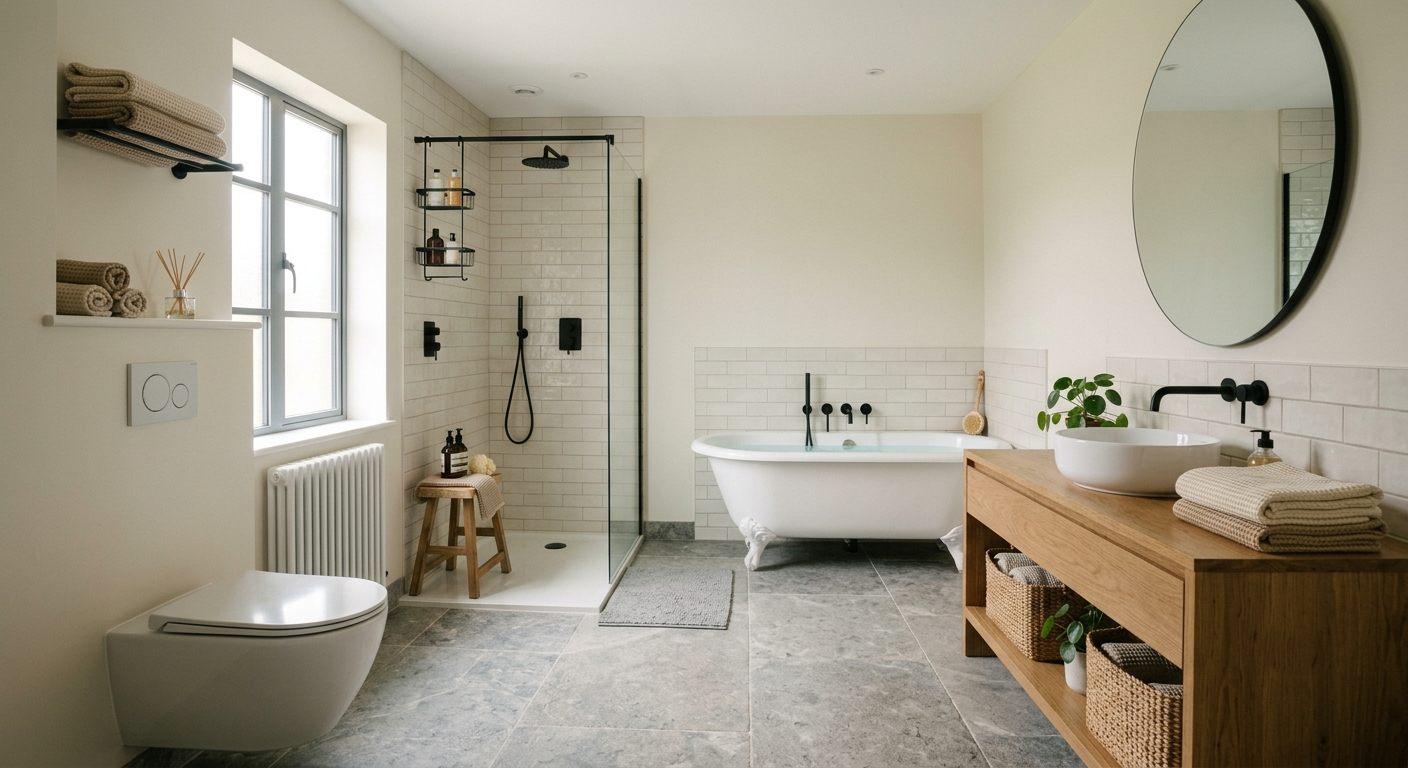
What Makes a Bathroom Look Elegant?
Elegance in bathroom design is often about getting the small details right. You do not need to use marble everywhere or choose the most expensive fittings available. Instead, focus on creating a sense of balance. The colours should work together, the fixtures should suit the size of the room, and every element should have a purpose.
A beautifully designed bathroom usually has a few common qualities:
- A simple and coordinated colour scheme
- Good natural or artificial lighting
- Clean and practical storage
- High-quality, easy-to-maintain finishes
- Comfortable and well-planned layouts
- Carefully selected sanitaryware and fittings
- A combination of textures rather than too many patterns
- Enough open space to make the room feel comfortable
The goal is not to fill every corner. In many cases, leaving some breathing room can make a bathroom feel more spacious and sophisticated.
Start With the Bathroom Layout
Before selecting tiles or choosing a vanity, think about the layout. A beautiful bathroom that is difficult to use will quickly become frustrating. The basin, toilet, shower and storage should be positioned in a way that makes everyday movement easy.
For example, the shower area can be separated from the dry area with a glass partition. This helps keep water contained while giving the bathroom a more open appearance.
In a larger bathroom, you may have more freedom to create separate zones. A double vanity, walk-in shower or freestanding bathtub can become part of the overall design.
For smaller bathrooms, however, every centimetre matters. Wall-mounted fixtures, floating vanities, compact basins and clever storage can help free up floor space. A large mirror can also make the room appear brighter and more open.
The important thing is to design according to the actual size and shape of the bathroom rather than trying to copy a design simply because it looks good in a photograph.
Choose a Colour Palette That Feels Calm
Colour plays a major role in how a bathroom feels. For an elegant bathroom interior, soft and neutral colours are a safe starting point. Shades such as warm white, beige, cream, taupe, light grey and soft earthy tones can create a calm atmosphere.
If you prefer something more expressive, deeper shades can be introduced through a feature wall, vanity, accessories or selected tiles. Some timeless combinations to consider:
Warm Beige + White + Natural Wood
A warm and inviting combination that feels welcoming and relaxed.
Soft Grey + White + Brushed Metal
Clean and contemporary with a polished, modern appearance.
Charcoal + Stone + Warm Lighting
A dramatic palette that adds character without feeling heavy.
Deep Green + White + Matte Black
Muted green paired with contrast accents for a refined feel.
The key is balance. If the walls, floor, vanity and accessories all compete for attention, the bathroom can quickly look busy.
Bathroom Tiles Can Define the Entire Space
Tiles are one of the most important decisions in bathroom design because they cover a large part of the room. The right tiles can make a bathroom look spacious, warm, modern or luxurious.
Large-format tiles are particularly useful when you want a cleaner visual appearance because fewer grout lines can make surfaces feel more continuous. Stone-look tiles are another popular option for creating an elegant appearance without requiring natural stone throughout the room.
For homeowners who prefer something more decorative, patterned tiles can be used as an accent rather than covering every wall. For example, you could keep most of the bathroom simple and introduce a textured or patterned tile behind the vanity or inside the shower area. This creates a focal point while keeping the overall design under control.
Floor Tiles Need More Than Good Looks
Bathroom flooring should always be chosen with practicality in mind. The floor is regularly exposed to water, so grip, durability and ease of maintenance are important considerations. A beautiful floor that becomes difficult to clean or uncomfortable to walk on can become a problem over time. Tile selection should therefore consider both appearance and everyday use.
Create a Beautiful Vanity Area
The vanity is often one of the first things people notice when they enter a bathroom. A well-designed vanity can become the focal point of the room while also providing useful storage.
Floating vanities are a good choice for modern bathrooms because they create a lighter appearance and leave some visible floor underneath. Wood-finish vanities can bring warmth to bathrooms dominated by tiles and stone. For a more minimal look, a simple white or neutral vanity can blend seamlessly with the walls.
The countertop should complement the rest of the bathroom rather than competing with it. You can also introduce character through the basin, mirror and hardware. A simple vanity paired with an interesting mirror and well-chosen lighting can often look more refined than a heavily decorated vanity.
The Mirror Is More Important Than You Think
A bathroom mirror is not just a functional item. It can influence how large, bright and stylish the room feels. A large mirror can visually expand a compact bathroom, while a rounded or arched mirror can soften a room filled with straight lines.
For a modern bathroom, a simple frameless mirror can create a clean appearance. If you want something more decorative, a slim metal frame or wooden frame can add personality. Backlit mirrors are another option when you want a softer, contemporary look.
The placement of the mirror should also be considered along with the lighting. A mirror that is beautifully designed but poorly lit will not provide the same everyday comfort.
Good Lighting Changes Everything
Lighting is one of the most overlooked parts of bathroom interior design. A bathroom should not depend on one bright ceiling light. Instead, consider using different layers of lighting.
General Lighting
This provides overall illumination throughout the bathroom. Ceiling lights or recessed fixtures can be used for this purpose.
Mirror Lighting
Lighting around the vanity is important for everyday tasks such as grooming and getting ready. Wall lights or integrated mirror lighting can provide more even illumination than relying only on a ceiling fixture.
Accent Lighting
If you want a more luxurious atmosphere, subtle lighting can be introduced beneath a floating vanity, around a mirror or inside selected niches. The result is a bathroom that feels more relaxed in the evening instead of looking like a brightly lit utility room.
Add Smart and Practical Storage
A bathroom can look elegant one day and cluttered the next if there is nowhere to keep everyday items. Storage should therefore be considered during the design stage, not added as an afterthought.
- Closed cabinets can keep toiletries, cleaning supplies and personal items out of sight.
- Mirror cabinets combine storage with the mirror area, saving valuable space.
- Built-in niches inside the shower can provide space for shampoo, soap and other products without taking up floor space.
- For smaller bathrooms, vertical storage can be particularly useful.
Keep the things you use regularly accessible, while keeping the countertop as clear as possible. A clean countertop instantly makes the bathroom feel more organised.
Walk-In Showers for a Modern Look
Walk-in showers can give a bathroom a spacious and contemporary appearance. A glass shower enclosure creates visual continuity and allows light to travel through the space rather than dividing the bathroom into smaller-looking sections.
For a minimalist bathroom, clear glass combined with large-format tiles can create a seamless appearance. A built-in shower niche, rain shower and simple fittings can complete the look.
Good bathroom design is not only about what you see. It is also about what works behind the walls and underneath the finishes.
Bring Warmth With Wood and Natural Textures
Bathrooms can sometimes feel cold because of the amount of tile, glass and metal used in them. Introducing warm textures can change that. Wood-look finishes, warm beige tiles, stone textures, woven accessories and natural-toned elements can make the bathroom feel more comfortable.
You do not necessarily need actual wood in wet areas. Moisture-resistant materials and wood-look finishes can provide a similar visual warmth while being easier to maintain. A warm vanity against a light stone-look wall, for example, can create a simple but sophisticated combination.
Add a Touch of Luxury Without Overdoing It
Luxury does not have to mean excess. Sometimes one carefully selected feature can make the entire bathroom feel more special. This could be:
- A statement mirror
- A beautiful vanity
- A walk-in shower
- A rainfall showerhead
- A textured feature wall
- Elegant wall lighting
- Premium-looking hardware
- A freestanding bathtub in a larger bathroom
- A carefully chosen stone-look surface
The trick is to choose a few details and let them stand out. When every element is a statement piece, nothing really becomes the statement.
Don't Forget Ventilation
An elegant bathroom also needs to remain healthy and comfortable over time. Bathrooms naturally deal with moisture, so proper ventilation is essential. Good ventilation helps reduce excessive humidity and can help protect finishes, cabinets and other materials from moisture-related problems.
If the bathroom has a window, make the most of natural ventilation and daylight where possible. For bathrooms without sufficient natural ventilation, an appropriate exhaust system becomes even more important. This is one of those design decisions that may not be visible in photographs, but it can make a major difference to how the bathroom performs in everyday life.
Design Small Bathrooms Differently
A small bathroom does not have to feel small. With thoughtful planning, even a compact bathroom can look clean, elegant and comfortable. One of the easiest ways to create a sense of openness is to avoid unnecessary visual divisions.
A consistent tile palette across the floor and shower area can make the space feel more connected. Glass shower partitions can also help maintain visibility across the room. Floating vanities and wall-mounted fixtures can create more visible floor area. Mirrors can reflect light and make the bathroom appear larger.
Light colours can also help create an airy atmosphere, although that does not mean small bathrooms must always be white. A carefully chosen darker shade can work beautifully when balanced with good lighting and lighter elements. The important thing is to use the available space intelligently.
Think About Maintenance Before Finalising the Design
A bathroom is used every day, so maintenance should be part of the design conversation. Ask yourself:
- Will this surface be easy to clean?
- Will the material handle regular moisture?
- Is there enough storage?
- Can the fittings be maintained easily?
- Will the design still look good after several years?
For example, an extremely complicated tile pattern may look impressive initially but could become visually tiring or difficult to maintain. Similarly, too many open shelves may create a cluttered appearance when they become filled with everyday products. A timeless bathroom is usually one where beauty and practicality work together.
How to Make a Bathroom Feel More Like a Personal Space
Your bathroom does not have to look like a hotel bathroom. It should reflect your taste. Small details can make a bathroom feel more personal. You could introduce a favourite colour through accessories, choose a distinctive mirror, add artwork suitable for humid environments, or use plants that can tolerate the conditions.
Even towels, soap dispensers, baskets and small decorative objects can influence the final appearance. The goal is not to decorate every available surface. Instead, select a few things that make the room feel like part of your home.
Timeless Design vs. Bathroom Trends
Bathroom trends can be inspiring, but following every trend is not always the best approach. A bathroom renovation is a long-term investment. You want the space to look good not only this year but several years from now.
That is why timeless elements often make a strong foundation. Neutral surfaces, quality fittings, simple layouts and good lighting can remain attractive for a long time. Trends can then be introduced through easier-to-change elements such as mirrors, accessories, lighting styles or selected decorative details. This approach gives you flexibility without requiring another complete renovation whenever design preferences change.
Common Bathroom Design Mistakes to Avoid
Even a good bathroom design can lose its impact because of a few simple mistakes.
- Choosing appearance over function — A beautiful fixture is not necessarily the right fixture for your bathroom. Always consider size, placement and everyday usability.
- Using too many materials — Mixing too many tiles, colours, metals and textures can make the room feel confused. Choose a clear design direction and build around it.
- Ignoring storage — Without adequate storage, even the most beautiful bathroom can quickly become cluttered.
- Poor lighting — One bright ceiling light is rarely enough. Think about general, task and accent lighting.
- Forgetting ventilation — Moisture management is essential for maintaining a bathroom over time.
- Making everything match exactly — A little variation in texture or finish can make the space feel more natural and considered.
- Following trends too closely — Choose trends that genuinely suit your home and personal taste rather than using them simply because they are popular.
Creating an Elegant Bathroom on a Practical Budget
An elegant bathroom does not always require a huge budget. If you are working with a limited budget, spend first on the elements that have the greatest impact and are difficult to replace later. These may include:
- Plumbing work
- Waterproofing
- Quality flooring
- Sanitaryware
- Lighting points
- Electrical work
- Storage planning
Once these fundamentals are taken care of, decorative elements can be upgraded according to the available budget. A simple bathroom with good proportions, clean finishes and thoughtful lighting can look much more expensive than a bathroom filled with unnecessary decorative features.
A Bathroom Should Feel Good, Not Just Look Good
The best bathroom designs are not necessarily the ones that photograph the best. They are the ones that feel good when you actually use them. You want the shower to be comfortable. You want your everyday products to have a place. You want enough light around the mirror. You want the floor to feel safe. You want the room to remain easy to clean.
And at the end of the day, you want to walk into the bathroom and feel that everything belongs there. That is where thoughtful interior design makes a difference.
Final Thoughts
An elegant bathroom space is created through a combination of thoughtful planning, suitable materials, comfortable lighting, practical storage and a design style that feels natural to your home. You do not need to fill the room with expensive finishes to create a sophisticated appearance. Sometimes a simple colour palette, a beautiful vanity, a well-placed mirror and carefully selected lighting are enough to transform an ordinary bathroom.
At Amandeep Interiors, we believe that good interior design should make everyday life easier while also making your home feel more personal. From compact bathrooms to spacious master suites, every space has its own possibilities. The right design begins by understanding how you use the room, what you need from it and how you want it to feel.
An elegant bathroom is not simply about looking beautiful. It is about creating a space that feels comfortable, works effortlessly and remains beautiful for years to come.
Frequently Asked Questions About Elegant Bathroom Design
Start with a simple colour palette, coordinated tiles, good lighting and a clutter-free vanity. Add one or two statement elements, such as a stylish mirror or attractive lighting, instead of decorating every surface.
Neutral shades such as warm white, beige, cream, taupe and soft grey are excellent choices for a timeless bathroom. You can also introduce muted green, blue or darker shades for additional character.
Use a simple colour scheme, large mirrors, glass shower partitions, floating storage and visually continuous surfaces. Keeping unnecessary items off the floor and countertops can also make the room feel more open.
A combination of general lighting, mirror or task lighting and subtle accent lighting usually creates a more comfortable result than relying on one ceiling fixture.
Yes. A properly planned walk-in or glass-enclosed shower can help a small bathroom feel more open because it maintains visual continuity throughout the space.
Storage is extremely important. A combination of vanity cabinets, mirror storage and built-in niches can keep everyday products organised while maintaining a clean appearance.
Trends can provide inspiration, but the main design should suit your home, lifestyle and long-term preferences. Timeless materials and layouts can be combined with smaller trend-led details.
Consider the layout, plumbing, waterproofing, ventilation, lighting, storage, flooring, sanitaryware and electrical requirements before finalising the decorative design.
Focus on the elements that make the biggest visual difference, such as lighting, mirrors, a well-designed vanity, coordinated tiles and quality-looking hardware. Good planning can often create a premium appearance without excessive decoration.
An interior designer can help bring together the layout, materials, lighting, storage and overall style so that the bathroom is not only attractive but also practical for everyday use.
About Us

Amandeep Interiors
Latest Articles
Subscribe
to Our Newsletter